
Horns have been a cornerstone crafting material in Palworld ever since I first plunged into the Palpagos Islands back in early 2024, and as we settle into 2026, they remain just as essential for any serious base builder or battler. Whether you’re piecing together a saddle to blaze across the map or brewing up a batch of life-saving medical supplies, a steady supply of Pal Horns is non-negotiable. I’ve spent hundreds of hours refining my farming routes, experimenting with different Pals, and min-maxing my resource loops—so let me walk you through everything I’ve learned.
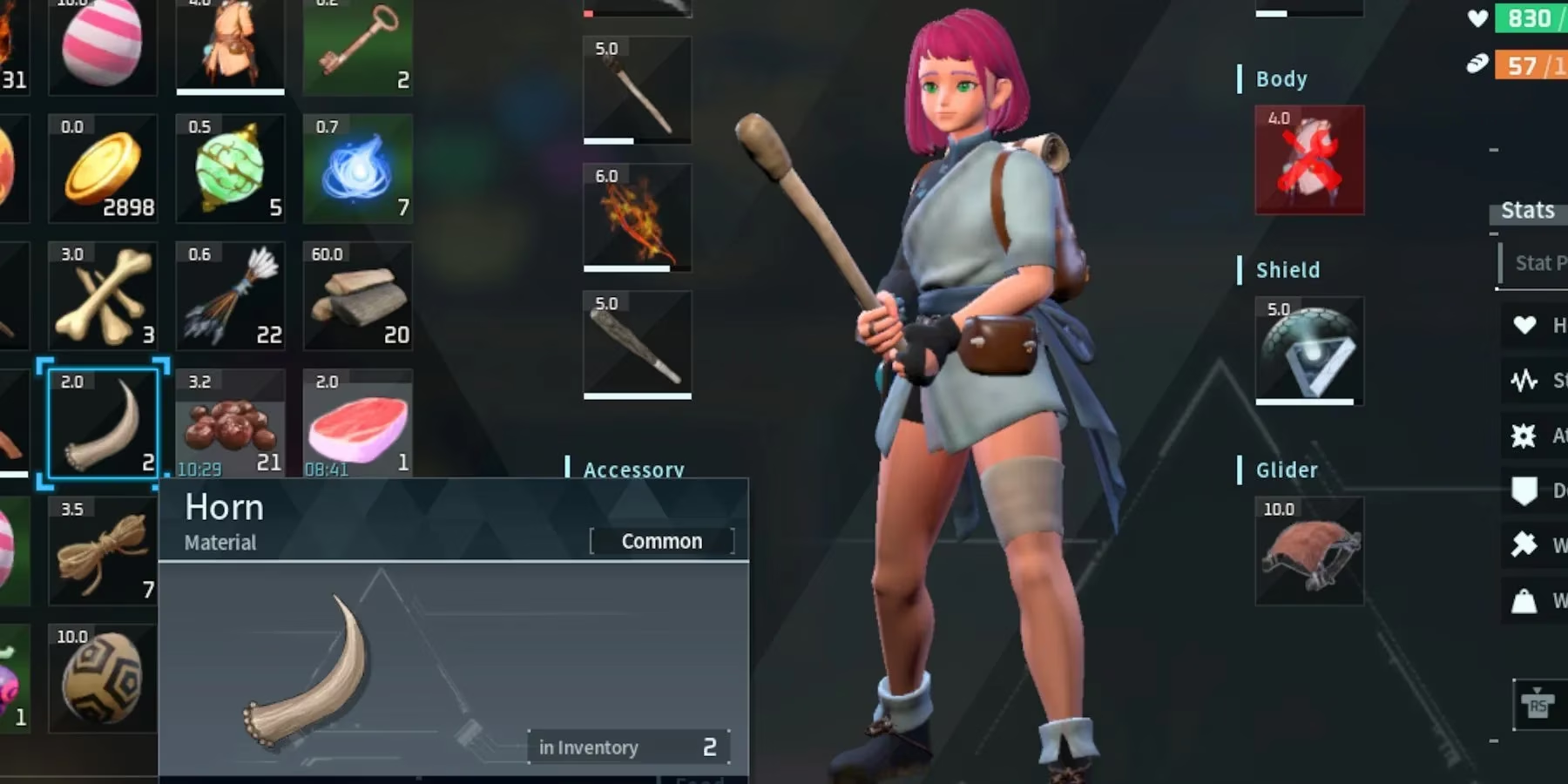
🦌 Which Pals Drop Horns in 2026?
The good news is that Horns are not gated behind super rare spawns—but you do need to know which creatures to target. Over the years, the pool of Horn-dropping Pals has remained fairly stable, with a few additions I’ve noticed in recent patches (like the occasional event variant). Here are the most reliable sources I personally rotate through:
| Pal | Area Recommendations | Drop Notes |
|---|---|---|
| Eikthydeer | Eastern Plains near Rayne Syndicate Tower | Drops ~2 Horns, Leather, and Eikthydeer Venison. My go-to early-game farm. |
| Caprity | Grassy areas west of the starting zone | Similar drop rate; easier to spot due to its green coloring. |
| Arsox | Hot biomes, volcano regions | Higher level, but more Horns per defeat. |
| Eikthydeer Terra | Rocky highlands and desert fringes | Great alternative if you want to avoid cold biomes. |
| Fenglope | Misty forests and plateaus | Often drops additional valuable materials. |
| Incineram & Incineram Noct | Volcanic dungeons or night-time hunts | Tough but rewarding; each can drop multiple Horns. |
| Reindrix | Snowy mountains | Perfect when you’re already farming Ice Organs. |
| Univolt | Near the central plains | Fast respawns make it a good filler. |
Of course, you don’t have to rely on hunting alone. If you’ve amassed a tidy sum of Gold—say from selling excess Pals or treasures—you can purchase Horns directly from wandering merchants scattered around settlements. Each Horn costs 300 Gold, which isn’t cheap, but it can save time when you need a swift injection of materials mid-crafting session.

⚗️ What Are Horns Used For? A Surgeon’s Best Friend
Early on, I thought Horns were just another random loot to pawn off—until I unlocked the Medieval Medicine Workbench. This workstation is where Horns truly shine. By combining them with other organic drops like Bone or Pal Fluids, you can craft everything from basic Salves to high-tier Medical Kits that revive fainted Pals mid-dungeon. Here’s a quick reference of the healing items I rely on and their rough Horn cost (values may vary slightly with game balance patches in 2026):
-
Low-Grade Medical Supplies → 2–3 Horns
-
High-Grade Medical Supplies → 5–6 Horns
-
Mindwipe Tonics → 8–10 Horns (these became craftable in a 2025 update, allowing Pal respecialization)
Beyond medicine, Horns are critical for several rideable Pals’ saddles. For instance, the Eikthydeer Saddle requires 10 Horns and enables a slick double-jump ability. I vividly remember my first Fenglope saddle—it took 15 Horns and completely changed my traversal speed. Never skip these upgrades; mobility is survival in Palworld.

🧠 How to Farm Horns Like a Pro in 2026
Farming efficiency is where experience truly matters. Here’s the method I’ve perfected across multiple playthroughs:
1. Early-Game Loop: Eikthydeer Central
Head to the expansive fields just east of the Rayne Syndicate Tower. This zone is dense with Eikthydeer, and they respawn within minutes. Bring a strong Fire-type Pal to deal rapid damage—I prefer using a Foxparks or Arsox for the 1.5x damage multiplier against Grass types. Each Eikthydeer drops 1–3 Horns, and with a fast mount, you can clear the entire circuit in under four minutes, netting 30–40 Horns per run.
2. The Butcher’s Cleaver Technique
Capturing Pals instead of killing them might seem counterintuitive, but hear me out: when you later butcher captured Pals using the Meat Cleaver (unlocked at Technology Level 12), they often yield more Horns than direct kills. I keep a cage of low-level Eikthydeers and Caprities at my base, then process them in bulk. This trick doubled my Horn output without leaving home—perfect for rainy in-game days.

3. Diversify with Higher-Level Hunts
Once your team hits level 30+, switch to farming Fenglope or Incineram in volcanic areas. They drop 3–5 Horns each, along with Leather and Flame Organs. Yes, the fights are tougher, but the resource returns per hour are noticeably higher. I combine these runs with mining Sulfur nodes nearby to maximize my trip.
4. Merchant Runs as a Last Resort
I reserve Gold-bought Horns for emergency situations—like when I’m mid-craft during a base defense and can’t afford to leave. To sustain this, I set up a passive gold farm using Mau and other Gold-producing Pals. If you’ve been playing since 2024, you probably have a small fortune stashed; 300 Gold per Horn doesn’t sting too badly when you’re sitting on 100k.
📦 Final Thoughts from the Field
Even in 2026, with all the expansions and quality-of-life updates Palworld has received, Horns remain a vital resource that you shouldn’t overlook. They connect exploration, combat, and base management in a satisfying loop. My advice? Start your Horn stockpile early, invest in a reliable butchering setup, and always carry a few Medical Kits crafted from your harvested treasure. The Palpagos Islands are unforgiving, but with these strategies, you’ll keep your Pals in fighting shape—and look stylish riding them too.
Now get out there and collect those Horns! And if you stumble across a new variant that drops them, let the community know; the meta never stops evolving in Palworld.
The analysis is based on GameFAQs, where long-running player guides and Q&A threads often break down practical farming loops similar to the Horn routes described above—especially the efficiency tradeoffs between quick overworld circuits, higher-level target hunting, and stockpiling materials via capture-and-process strategies.
Comments