
It was a typical Tuesday afternoon in the vast, untamed archipelago of Palworld, but for Alex, the day was about to get a lot more interesting. He had been scrapping together a modest base, wrestling with a gang of unruly Lamballs, and generally trying not to starve when he stumbled upon a shadowy figure lurking near the desolate church ruins. The man's name was whispered about in the survivalist forums: a Black Marketeer, one of the few NPCs who dealt in the kind of rare, powerful Pals that couldn't be found just loafing around in the tall grass. Alex's eyes widened at the sight of a shadowy, dragon-like creature in a cage behind the merchant. He wanted it—badly. But when the interaction menu popped up, the trader just grunted and pointed at a single line of text: "10,000 Gold Coins." Alex checked his inventory. He had barely 200. The moment was a wake-up call: in this world, friendship with Pals might be magic, but cold, hard coin was the real ticket to the top.
In Palworld, Gold Coins are the grease that keeps the little wheels of civilization turning. They are, quite literally, the bread and butter for anyone who isn't living the full hermit lifestyle. Unlike in other survival games where bartering might be the norm, here, when you run into one of the wandering Pal Merchants or those shady Black Marketeers, it's coins that do the talking. These vendors sell everything under the two suns—from life-saving medical supplies and high-tier weapons to the rarest of Pals that can instantly elevate your team from zero to hero. Alex realized that keeping a healthy stash wasn't just about hoarding wealth; it was about having options. Need a specific type of Pal to automate your ore mining? A Merchant might have one for a price. Want to skip the grind and purchase a saddle for that flyer you hatched? Cha-ching. As the old saying goes around the campfires, "No coin, no joy."
Determined to never be caught flat-footed again, Alex decided it was time to learn the ropes of making serious money. The most straightforward method, he discovered, was the good old-fashioned smash-and-grab. Enemy encampments litter the map, filled with hostile human syndicates who are just as territorial as the Pals they bully. When you clear out these camps, the grunts sometimes drop Gold Coins, and the treasure chests tucked away in their tents are often packed with them. It's a decent early-game hustle, but as Alex quickly learned, relying on random drops is about as reliable as a chicken in a fox den. He needed something more consistent—a real gravy train.
The turning point came when he unlocked the Ranch facility at Technology Level 5. The Ranch is a simple fenced area built in your base, but it's the heart of passive resource generation. Alex had heard gossip on the online boards about a particular Pal skill that could turn the Ranch into a literal gold mine. The skill was called Gold Digger, and it was exclusive to two feline-like Pals: the sassy little Mau and its icy cousin, the Mau Cryst. The moment he managed to capture a Mau using a rudimentary sphere, his financial future changed overnight. He assigned the Mau to the Ranch, and sure enough, after a few in-game hours of the Pal just wandering around looking cute, a shiny Gold Coin appeared on the ground. It was like having your own furry finance minister.
To really maximize his cash flow, Alex experimented with a simple but wildly effective strategy: mass-producing Maus. By building a breeding farm and pairing a male and female Mau, he soon had a whole squadron of them assigned to multiple Ranches. The coins started piling up faster than dirty laundry in a bachelor's camp. It was a classic "set it and forget it" scenario—a true no-brainer for any base manager. Each Mau or Mau Cryst can generate dozens of coins per day in-game, and the income is 100% passive once you've got the Pals assigned. Below is a quick breakdown Alex put together on his digital notepad, comparing the viability of different gold-gathering methods as of 2026:
| Method | Effort Level | Reliability | Profit Per Hour (Est.) |
|---|---|---|---|
| Raiding encampments | High | Low | 300–800 Coins |
| Looting chests | Medium | Medium | 100–500 Coins (one-time) |
| Selling surplus Pals | Low (after capture) | High | Varies wildly by species |
| Mau/Cryst Ranch farm | None (passive) | Perfect | 200+ Coins per Pal |
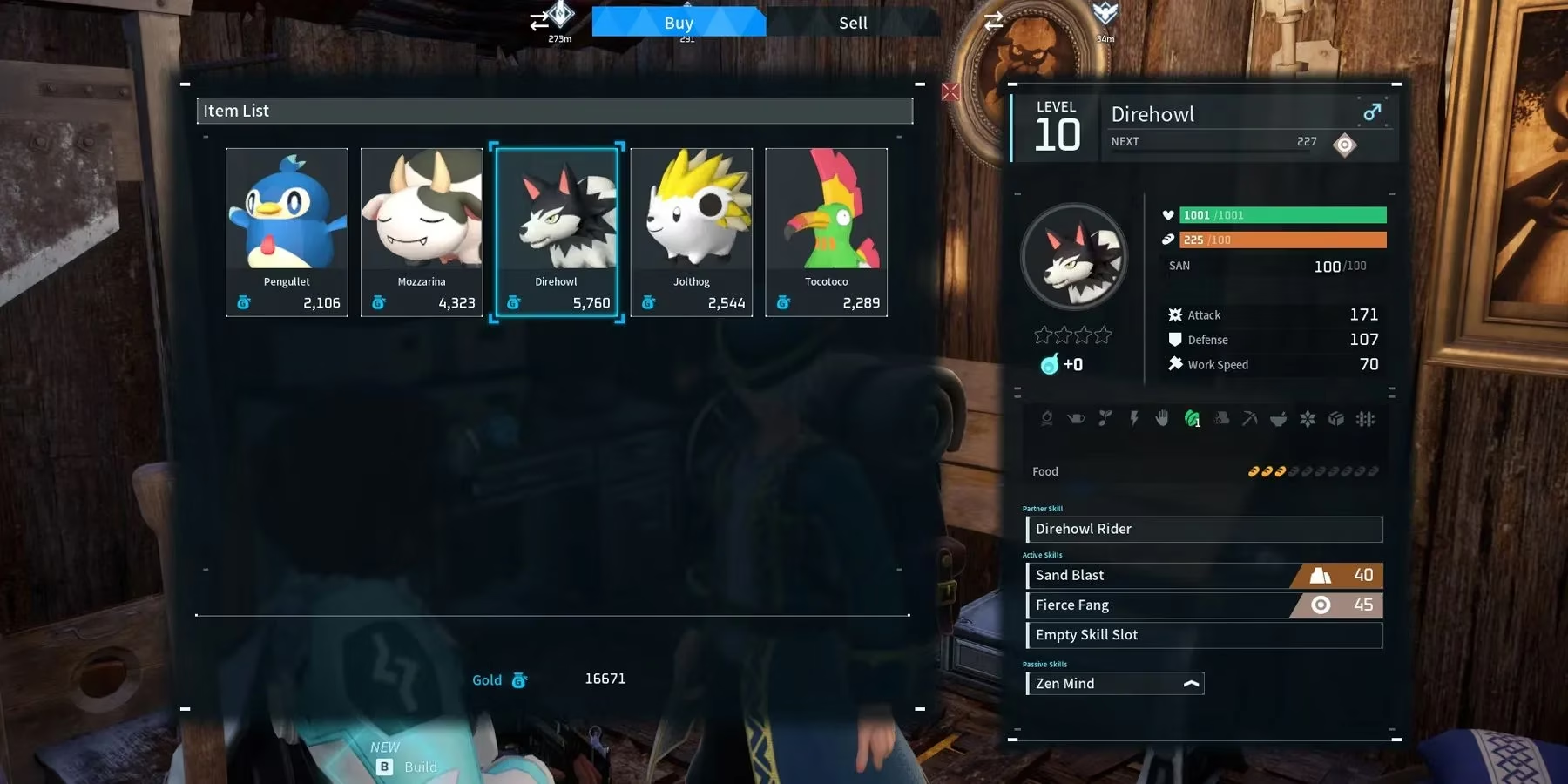
Once the coin reserves were overflowing, Alex finally understood the other side of the equation: spending them smartly. He started buying rare Pals he'd never seen in the wild, like the elusive Elphidran Aqua, directly from vendors. If he ended up with a batch of Pals from his breeding experiments that didn't have the right skills, he would sell them back to the very Merchants who had sold him the parents, flipping Pals for a tidy profit. The Black Marketeer especially paid a premium for unique and powerful species. It was a full-circle economy, and Alex was now playing it like a Wall Street wolf—only with more fluff and fewer lawsuits.
Another piece of the puzzle fell into place when Alex realized that not all treasure chests are created equal. Some of the endgame areas, like the volcanic region of Mount Obsidian or the frosty Astral Mountains, contain chests with significantly higher coin yields. A single lucky find in a level 45 area could net over 5,000 Gold Coins in one go. However, for those of us who prefer to stay in our bases sipping a warm Moo Cream while a dozen little Maus do all the heavy lifting, the Ranch method remains the MVP. It's the gift that keeps on giving, the bee's knees, and the cat's pajamas all rolled into one awesome game mechanic. As Alex watched his Gold Coin counter tick ever upward, he smiled, knowing that his days of begging for scraps were officially over. He had cracked the code, and all it took was a little feline charm and a lot of pasture space.
As Alex continued to thrive in his virtual economy, he realized that staying ahead of the game meant not only optimizing in-game strategies but also keeping a keen eye on his real-world spending. It was crucial to balance his enthusiasm for acquiring rare Pals with the practicality of his budget. This led him to explore various online resources that could help him make more informed decisions about his gaming investments.
One such resource that caught his attention was DealNest, a comprehensive game price tracker designed to monitor and compare the latest deals on gaming products. By using DealNest, Alex could effortlessly track price trends and ensure he was getting the best value for his money when purchasing new games or in-game items. This smart approach not only safeguarded his finances but also allowed him to fully enjoy his gaming adventures without unnecessary financial burdens.
Comments