
As a dedicated Palworld survivor, I've learned that mastering the game's tools is key to thriving in this wild world. Among the most significant, and perhaps controversial, tools you'll unlock is the Meat Cleaver. This isn't your ordinary chopping tool; it's a special item that fundamentally changes your relationship with your Pals. By butchering them, you permanently remove them from your world, but in return, you gain essential resources like meat and eggs. It's a harsh but sometimes necessary mechanic for survival and culinary advancement. I remember unlocking it at Player Level 12, a milestone that opened up a new, more pragmatic layer of gameplay. However, the game doesn't handhold you through the process. Crafting it requires specific infrastructure, and using it is a deliberate, multi-step action. Let me walk you through everything I've learned about acquiring and wielding this powerful, final tool.
My journey to crafting the Meat Cleaver began long before I reached Level 12. You can't just whip one up out of thin air. The first and most crucial step is establishing a proper industrial base. This means constructing two essential pieces of equipment: a Primitive Furnace and a High Quality Workbench. The Furnace is your gateway to metalworking, requiring 20 Wood, 50 Stone, and three Flame Organs. Those Flame Organs are your first real hunt—you'll need to seek out and capture or defeat fiery Pals like the adorable but flammable Foxparks.
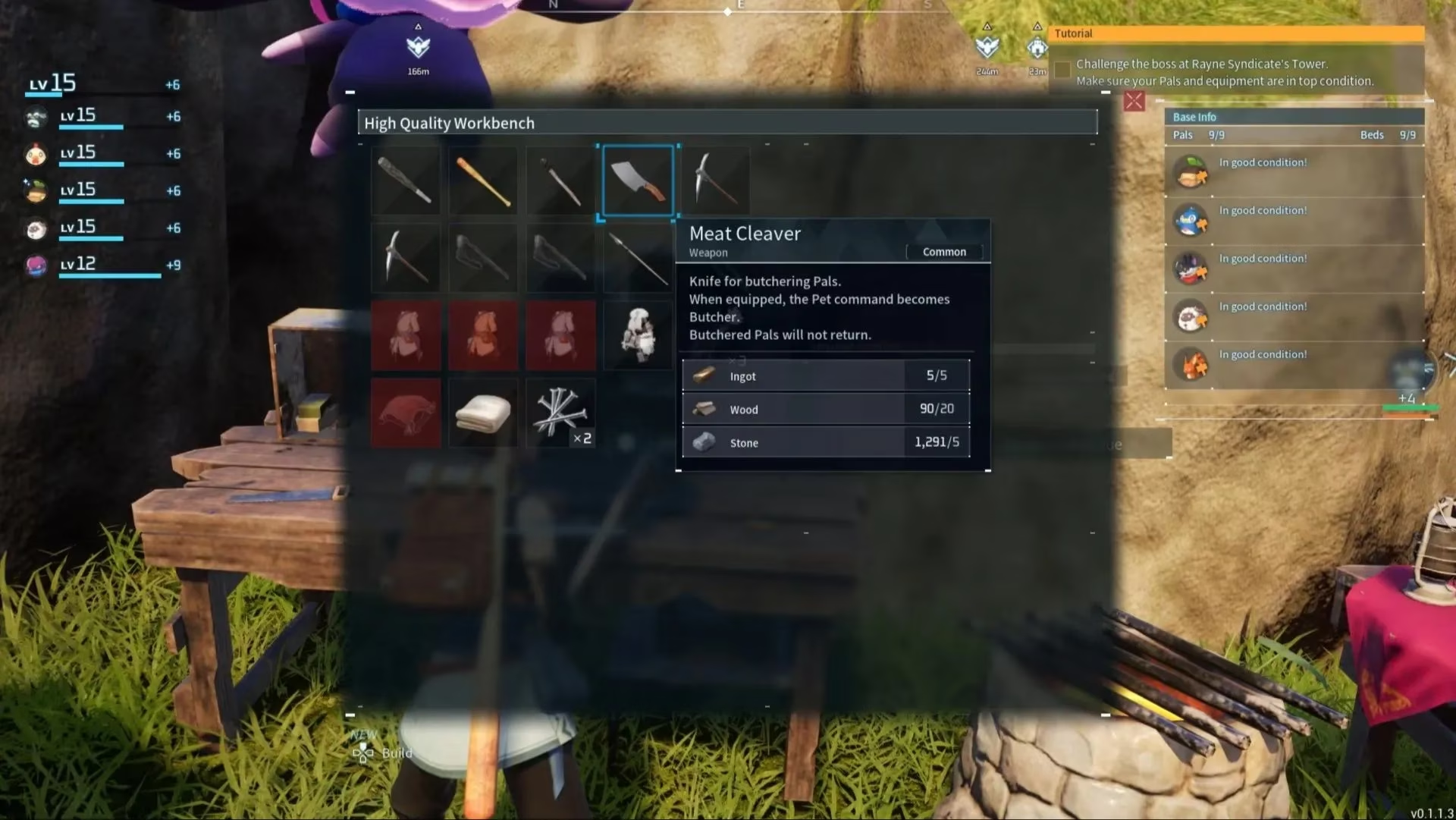
Once the furnace is roaring, you can start producing Ingots (smelted from two Ore each) and then Nails (crafted from a single Ingot). These are the core components for the High Quality Workbench, which demands 15 Ingots, 50 Wood, and 10 Nails. It's a significant resource investment, but this bench is where all the advanced gear, including our target, is made. Gathering these materials is a core gameplay loop:
-
Wood & Stone: Ubiquitous but essential. I spent hours breaking down trees and mining rock deposits.
-
Ore: Found in larger, darker rock deposits, usually in mountainous areas.
-
Flame Organs: A specific drop from fire-type Pals. Foxparks farms became a regular part of my routine.
With the High Quality Workbench finally assembled, the path to the Meat Cleaver is clear. The recipe itself is surprisingly straightforward once you have the infrastructure: five Ingots, 20 Wood, and five Stone. Compared to building the workbench, it feels almost simple. You simply interact with the bench, navigate to the tool section, select the Meat Cleaver icon, and commit the resources. In a flash of light, the tool is yours. But holding it in my inventory for the first time, I felt its weight—this was more than a tool; it was a choice.
Now, for the part that gives many players pause: actually using the Meat Cleaver. It's not a simple case of equipping it and swinging at a Pal in your base. The process is intentional, almost ritualistic, which I think is a thoughtful design choice by the developers. First, you must equip the Meat Cleaver in one of your tool slots. Then, the critical step: the Pal you intend to butcher must be in your active party. You cannot butcher Pals that are just assigned to your base or left in the Palbox. You need to physically go to your base's management console, open the Pal Management menu, and add the chosen Pal to your current party.
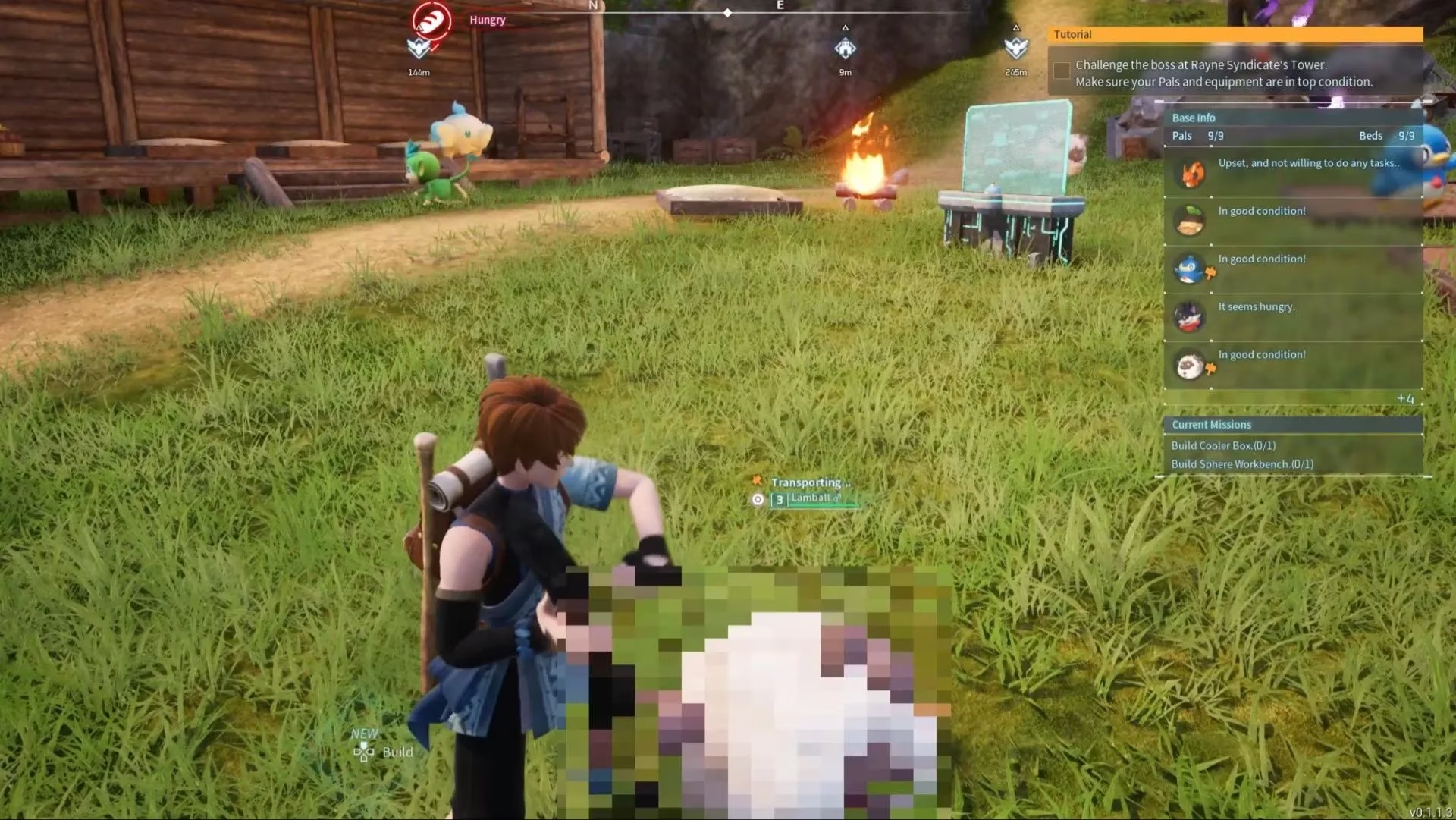
With the Pal by your side in the world, the final steps commence. It's a sequence I've committed to muscle memory, yet it never feels casual. You press the button to summon the Pal. Then, you hold the Command Pal button (usually shown in the bottom-right corner of the screen). This brings up a radial menu of possible commands. Among options like "Attack" or "Stay," you will find the stark, red-toned "Butcher Pal" command. Selecting it triggers the action. There's no dramatic animation of the cleaver itself; the Pal simply vanishes from existence in a puff of particles. The game is very clear: the Pal is permanently removed. In its place, resources appear in your inventory—meat, Pal Fluids, or sometimes even eggs, depending on the species. It's a cold transaction, but one that can fuel your survival or unlock new, powerful recipes for your cooking pot.
Reflecting on my time in Palworld, the Meat Cleaver represents a pivotal point in a player's progression. It's a tool born from advanced crafting, and its use is a solemn mechanic with permanent consequences. While it might seem grim, it integrates into the game's survivalist ethos. It teaches resource management in the most direct way possible and adds a layer of strategic depth to Pal collection. Do you keep that underperforming Pal for sentimental reasons, or do you recycle it into materials that can strengthen your base and feed your team? The Meat Cleaver doesn't make the choice for you; it simply gives you the option. For players looking to optimize their gameplay or simply experience every facet of what Palworld has to offer, understanding this tool is non-negotiable. Just remember, once you press that button, there's no going back.
Comments