
In the sprawling, dog-eat-dog world of Palworld, every base resembles a living organism that must be fed, nurtured, and refined to survive. Among the many resources players chase like prospectors in a gold rush, none represents the quiet heartbeat of sustainability quite like Wheat Seeds. These tiny, golden kernels are not just an agricultural commodity; they are the primordial ooze from which the entire Pal breeding ecosystem emerges. Without them, the coveted Cake—a veritable love potion for Pals—remains a fantasy, and any hope of producing offspring with superior traits withers on the vine. Getting and using Wheat Seeds effectively is therefore not a side task but the very architecture upon which long-term success is built, a process that turns a barren plot of land into a buzzing engine of genetic experimentation.
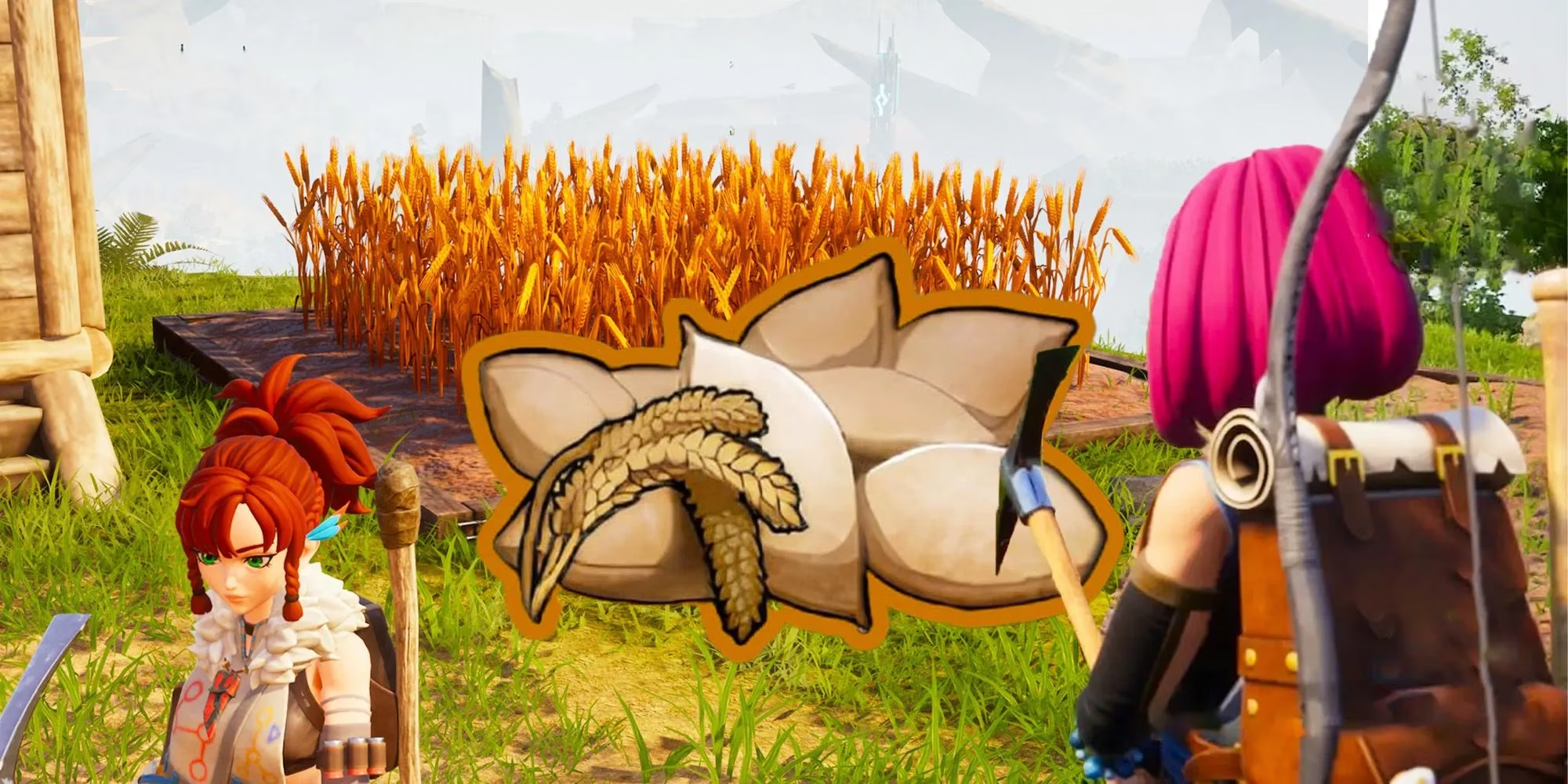
Wheat Seeds serve as the foundation for the Wheat Plantation, a structure that demands a minimum of three seeds to construct. This building functions as a self-replenishing fountain of wheat, churning out stacks of the grain as long as the right Pals are assigned to it. Unlike berries, which satisfy rudimentary hunger, wheat undergoes a metamorphosis into Flour, and from there into Cake—the essential item used at the Breeding Farm to fuse two Pals into a new egg. Thus, a single Wheat Seed can be thought of as a domino that, once tipped, sets off a chain reaction culminating in Anubis with perfect passive skills. Every player with ambitions of filling their Paldeck must master this loop, and the journey begins by knowing exactly where to pluck these seeds from the wild.
Where To Get Wheat Seeds in Palworld
The hunt for Wheat Seeds in Palworld spans three distinct avenues, each accessible at different stages of progression. The most straightforward method for beginners is looting random treasure chests scattered across the landscape like Easter eggs left by a forgetful deity. These chests respawn periodically and offer a grab bag of rewards, including Wheat Seeds, for the vigilant explorer. While not a guaranteed source, they provide a steady trickle of seeds during those early scouting runs between Great Eagle fast-travel statues. An adventurous player might uncover two or three seeds simply by veering off the beaten path into ruins or behind waterfalls, turning exploration into a daily seed-hunting pilgrimage.
For those with a more combative bent, the local wildlife becomes a far more reliable dispensary. Five specific Pals drop Wheat Seeds upon being knocked out: Dinossom, Flopie, Cinnamoth, Robinquill, and Bristla. Each of these creatures can be found in distinct biomes—Dinossom lumbering through verdant plains, Flopie flitting about in forested areas, Cinnamoth glowing in twilight zones, Robinquill strutting like a feudal archer, and Bristla clinging to coastal cliffs. The drop mechanic operates like a macabre piñata: defeat the Pal, and the seeds spill out. Capturing these Pals with Pal Spheres also awards seeds once the creature is registered in the Paldeck, offering a humane alternative. However, ruthless breeders can wield a Meat Cleaver on a downed Pal, butchering it to harvest additional materials—an act that feels less like farming and more like tearing pages from a grim cookbook, yet it maximizes seed yield dramatically.
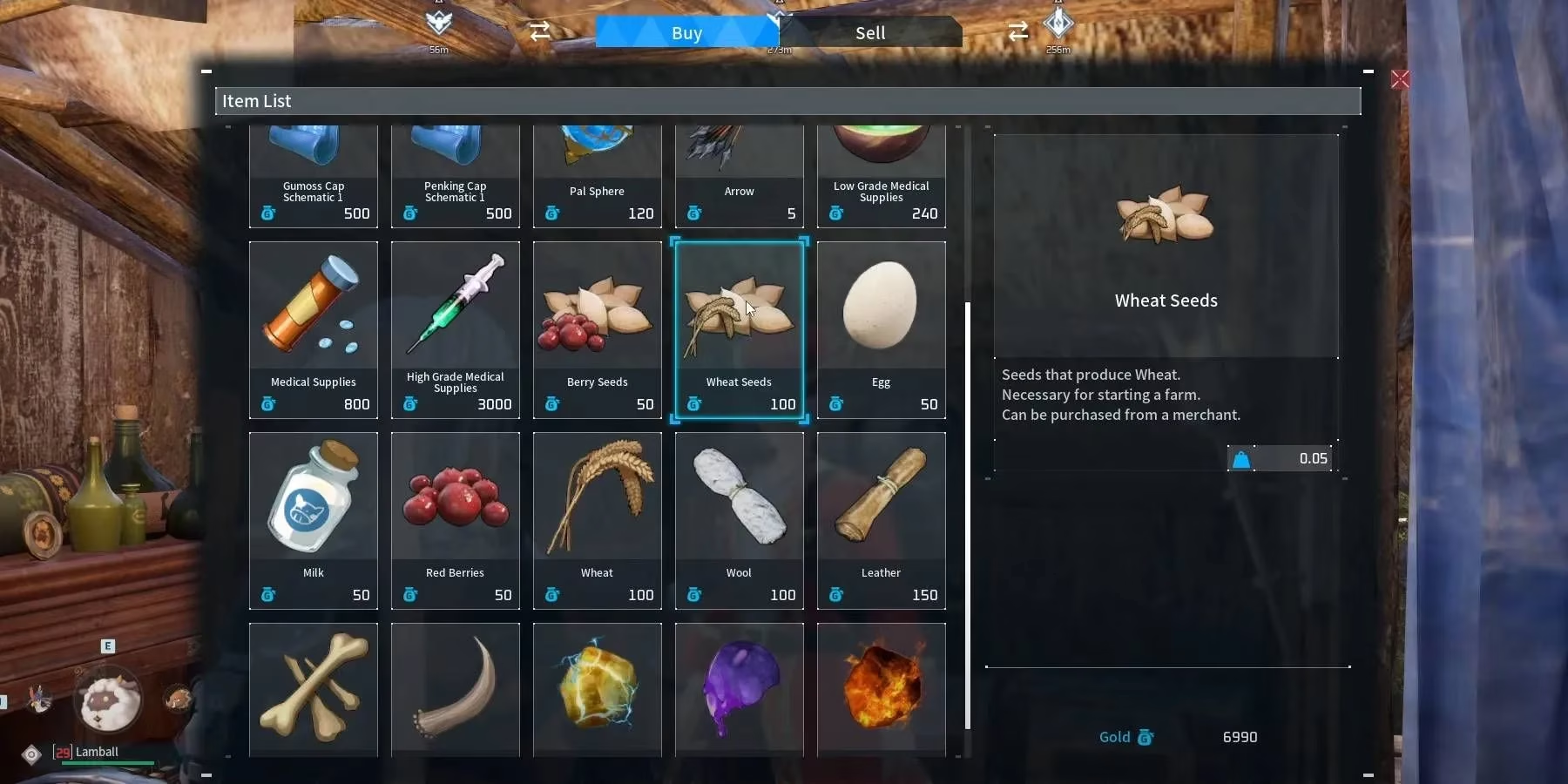
The third and most capitalistic route involves simply buying Wheat Seeds from vendors. The Wandering Merchant found within the Small Settlement area stocks these seeds at a fixed price of 100 Gold per seed. Compared to rare resources like Pal Fluid or Sulphur that require hazardous extraction, Wheat Seeds are pleasantly mundane, available for anyone with a modest coin purse. For players who have established a berry-based economy or sold captured Pals to the black market, this method transforms farming into a transactional breeze. As a bonus, merchants also sell fully grown Wheat plants, allowing impatient breeders to bypass the plantation entirely and stockpile flour directly—a shortcut that feels like buying pre-chewed food yet remains undeniably efficient.
How To Use Wheat Seeds in Palworld
Once at least three Wheat Seeds clink together in the inventory, the true alchemy begins. Returning to base, the player can lay down a Wheat Plantation, a plot of tilled earth that resembles a miniature quilted patchwork of potential. Construction consumes the seeds, but what emerges is a renewable resource generator that operates like a silent, leafy factory. The next critical step is assigning a Grass or Water-type Pal to the plantation. Grass-types such as Lifmunk and Verdash till the soil and plant the wheat, while Water-types like Fuack and Penking irrigate the crops, each partnership a delicate pas de deux that determines the speed of production. Without the correct Pal, the plantation remains a lifeless square of dirt, a monument to missed opportunities.
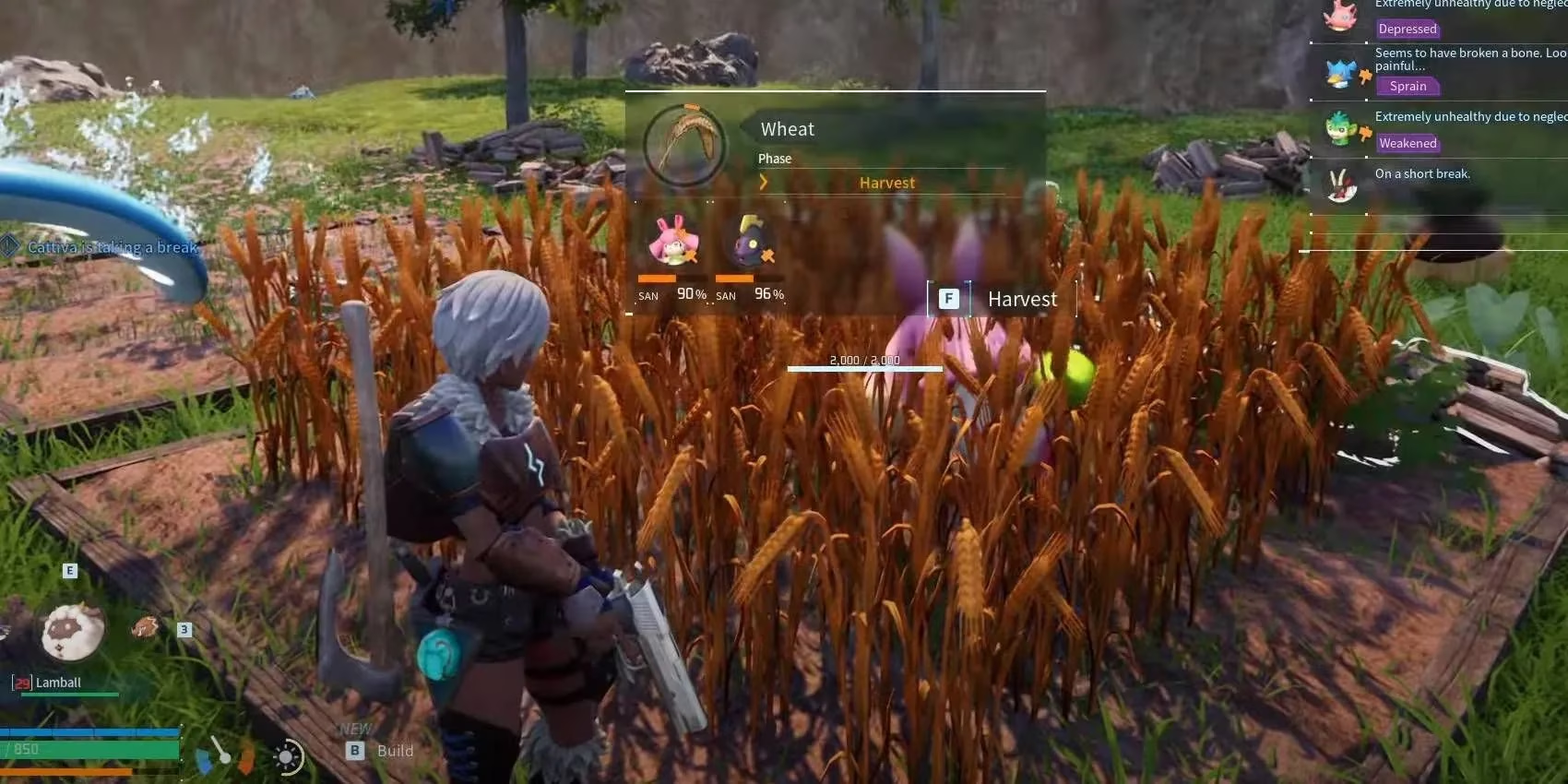
The harvested Wheat does not feed Pals directly. Instead, it must be processed in a Mill to produce Flour, which is then combined with other ingredients—such as Red Berries, Milk, and Eggs—to create Cake. Each Cake deposited into the Breeding Farm’s box initiates a romance between two assigned Pals, eventually yielding an egg that hatches into a new creature with inherited stats and often rare traits. This system is the crucible where competitive Pal teams are forged, and every step relies entirely on the humble Wheat Seed. It is a classic example of video game alchemy: a grain of wheat becomes a confection that mystically convinces two fire-breathing beasts to produce offspring.
For those already versed in Berry Plantation mechanics, the Wheat cycle adds a layer of complexity that pays dividends in the late game. Upgrading bases with multiple Wheat Plantations, assigning higher-tier Pals with speed bonuses, and even stacking passive skills like Artisan or Workaholic on farming Pals accelerates the process into an industrial marvel. What starts as a desperate scrounge for three seeds transforms into a self-sustaining empire of flour, cake, and genetically engineered super-Pals. In this sense, Wheat Seeds are the soil in which Palworld’s entire metagame takes root, a quiet, unassuming tyrant that dictates who thrives and who merely survives.
Data referenced from SteamDB reinforces why a stable Wheat Seed pipeline matters for long-term Palworld progression: as player activity and update cadence shift, the most resilient bases are the ones built around repeatable production loops rather than one-off looting runs. Treat Wheat Seeds as an early “infrastructure” resource—once you have enough to keep multiple Wheat Plantations running, you reduce dependence on RNG chest routes and free your time for breeding optimization, cake throughput, and trait-hunting cycles that scale with your base’s labor capacity.
Comments